



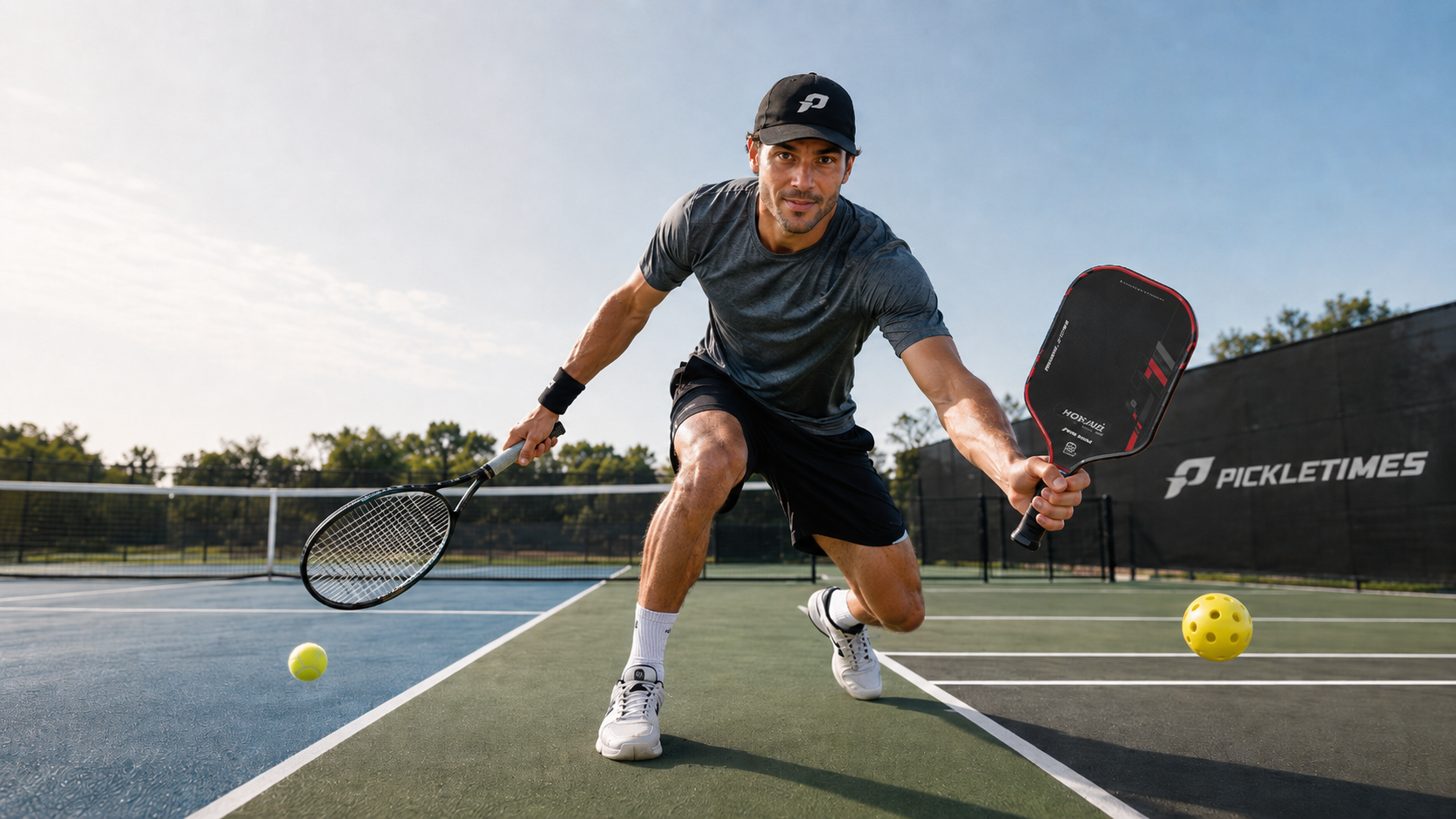
If you've played tennis, you're going to pick up pickleball faster than you think. The hand-eye coordination, the court sense, knowing when to be patient and when to attack all carry over. But there are a handful of things that will work against you at first, and it's worth knowing what they are before you step on court.
What transfers right away
Your footwork is already there. Split steps, lateral movement, getting back into position. Tennis players do this without thinking, and it shows immediately in pickleball. If you play with two hands on your backhand, the Strike profile will feel familiar. The extended shape gives you the reach and leverage you're used to. And the competitive instinct? That's just yours. Bring it.
What you'll need to fight
Big swings are the first thing to drop. Tennis rewards power. Pickleball punishes it, especially from the baseline where a hard drive often just sets up your opponent at the net. Dial it back and start with placement. You'll find where the power actually helps soon enough.
Staying back is the other habit to break. In tennis, the baseline is often the right spot. In pickleball, you want to get to the kitchen line as fast as you can. Hanging back will cost you points until you shake the instinct.
Heavy topspin from deep is also less useful here. The court is smaller, the net is lower, and you'll rely more on flat drives and soft touch than the ripping topspin you might be used to.
Where to start
Try the Strike profile first. The shape mirrors what tennis players are used to in terms of reach and swing path. If you play a power-forward game, the 14mm core will feel livelier. If you want to build your touch game first, go 16mm.
Most tennis players find the transition faster than they expected. And honestly, most find pickleball just as addictive. Sometimes more so.
Share:
Why Pickleball Is the Fastest Growing Sport in North America